The internship began on 15 June 2026, when most of us had almost no prior knowledge of VESTA and BURAI. Under Dr. Pokar’s guidance, we learned to work with both platforms, generating CIF files in VESTA and conducting DFT calculations in BURAI. BURAI was often challenging and time-consuming, and we encountered several technical roadblocks throughout the process. Working through these challenges became an important part of the research experience.
One of the most important lessons from the internship was that the outcome of a calculation depends on several computational parameters, with the Input File being particularly important. A single incorrect parameter could result in an error or affect the calculation. The research involved generating CIF structures for Si, Graphene, Fe-BCC, Fe-FCC, MgO, GaAs, and other systems, followed by two types of calculations. In one approach, the k-mesh grid was kept constant while the wavefunction cutoff was varied, while in the other, the process was reversed. The ratio between the wavefunction cutoff and charge density cutoff was maintained consistently where required, along with the appropriate pseudopotential files.
The convergence behaviour varied considerably across the systems studied. Silicon was relatively straightforward, while Graphene presented greater challenges. Both Fe-FCC and Fe-BCC required more extensive effort, with convergence behaviour that was less smooth than that observed for the semiconductor systems. The resulting graphs showed both monotonic and oscillatory behaviour depending on the system. GaAs and MgO were comparatively less complicated.
The research also involved an attempt to calculate the formation energy of Zinc Sulphide. The calculations for Zinc were comparatively less time-consuming, while Sulphur required greater computational effort. The formation energy was ultimately calculated in terms of the energy per formula unit.
Working across three different systems also involved encountering numerous computational errors. These were addressed through a combination of AI-assisted exploration, parameter adjustments, and guidance from the supervisor. This process demonstrated that computational research involves considerable iteration, troubleshooting, and methodological refinement.
At the conclusion of the internship, we prepared a detailed research report documenting the work undertaken during the two-month period. Preparing the report required approximately four to five days and involved systematically documenting the calculations, observations, and research work completed throughout the internship.
Over the course of these two months, I gained considerable confidence in computational research. While AI was used extensively as a supplementary tool, it was ultimately the knowledge and guidance of the supervisor that helped us understand and resolve the challenges encountered during the work. The internship also introduced me to broader areas of computational materials research, particularly thermoelectric materials and Heusler alloys. My interest in thermoelectric materials has continued to grow, and the experience has encouraged me to explore these areas further.
Research Takeaways
01
Strengthened Computational Research Skills
To the extent possible, work on just one system and stick to it. Changing laptops can create hassles. Although these hassles may prove to be learning opportunities, retrospectively.
02
Improved Understanding of Research Methodology
Get the Input File right. Everything depends on it.
03
Enhanced Problem-Solving and Technical Skills
If one knows a good source of downloading CIF Files, VESTA wont be really necessary. However, it becomes essential when the kind of file one is looking for isnt available anywhere. Use any GenAI to generate isntructions for building the CIF file, step by step.


 Konnifel selects Rohit Jha’s research contributions as the Feature for October 2026 (Click here to Read Full Story)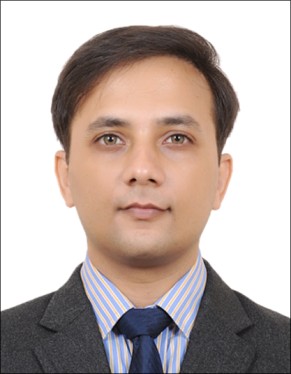




Ayush
Very nice and informative article
2 days agoGeetika Sharma
Good article
2 days agoAyush
Very nice and informative article
3 days agoGeetika Sharma
Good article
3 days ago